
The steep decline in commodity prices has reversed.

US rate hike fear keeps Asian firms in check; India most upbeat.

Government hits back, tells rating agency to introspect on processes.

Supported by slightly stronger global growth, improving export competitiveness and implementation of recently approved investment projects, India's growth is expected to recover from 4.4 per cent in 2013 to 5.4 per cent in 2014, the IMF said.

'The rate of interest from the EPF is still attractive compared to the rates on fixed deposits, National Savings Scheme, Public Provident Fund...'

'India's economy faces further downside risks from sluggish private investment and rural demand weakened by slow wage growth.'

This flight of capital began in early August due to risk-aversion created first by rising geopolitical tensions due to North Korean aggression and second by the US Fed's decision to shrink its balance sheet

Dealmakers and advisors feel investors are shifting their focus to Asia Pacific, especially India, owing to geopolitical instability driven by events such as Brexit and protectionist trade wars.

With economic activity buoyed by expectations from the new elected government of "Prime Minister Narendra Modi, India is benefiting from a 'Modi dividend'," the Bank said in its twice-a-year South Asia Economic Focus report on Monday.

The outlook is improving and that mostly reflects the fact that the new government has pledged to prioritise economic reforms.

The Indian rupee is down nearly 2 per cent against the US dollar since the beginning of January 2019. Experts attribute the Indian rupee's relatively poor performance to a sharper-than-expected fall in economic growth in India.
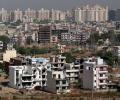
The total demand has remained subdued mainly due to high interest rates and property prices.

Globally, gold fell by 0.94 per cent to $1,094.20.

The Sensex posted its biggest single-day jump in over a decade at 1,921 points and investors' wealth soared by a staggering Rs 6.8 lakh crore after Finance Minister Nirmala Sitharaman delivered a surprise cut in corporate tax rates on Friday.
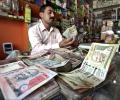
India is projected to see moderate average annual growth of 5.9 per cent during the 2014-18 period amid the country witnessing macroeconomic weaknesses, according to Paris-based think tank OECD.
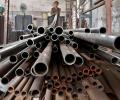
Rising prices of international coal - both coking and thermal - used in the making of ferrous and non-ferrous metals, respectively, are expected to have an impact on margins of metals companies in July-September quarter (Q2) as steel companies may see margins getting eroded, while the base firms could stand to benefit, said brokerages.

Gross non-performing assets of public sector banks surged to 9.32 per cent (Rs 4.76 lakh crore) of advances in 2015-16, from 5.43 per cent (Rs 2.67 lakh crore) in 2014-15.

India's upbeat outlook contrasts with neighbouring China, where growth slipped to 6.7 in the first quarter
Weakness of dollar in the overseas market also boosted the domestic currency, a forex dealer said.

Comparative to other Asian GDP growths, India would have the fastest economic expansion, it said

'We look at firms that can be regional or global leaders.'

The 30-share Sensex ended higher by 177.46 points at 28,885.21 and the Nifty gained 63.90 points at 8,778.30.

South and South-West Asia could witness an economic growth of 5.3 per cent in 2015, which will be a four-year high.

Alibaba's pervasive economic and social influence in China is seen as a threat to the authority of the Chinese Communist party, notes Shyam Saran.

'The outlook for private investment, which has been such a weak link for India for so long, remains challenging.'
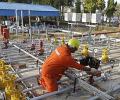
It is rare for Cabinet ministers to tick off state-owned companies publicly, yet that was what then petroleum and natural gas minister Dharmendra Pradhan did for ONGC. Speaking at an event on June 29, Pradhan said he has asked India's premier exploration company to find fresh oil acreages fast. "Do it yourself through some joint venture (or) through a new business model. But the government cannot permit you to hold resources for an indefinite time." The reason for this stricture is India's rising dependence on imported oil and gas. Or, to put it another way, falling domestic production (see chart: "Crude truth"), especially from ONGC, which faces a simple problem.

Goldman Sachs forecasts real GDP growth to accelerate to 7.9 per cent in FY17 from a projected 7.5 per cent in FY16.
The elections held in April-May 2019 will be an important determinant of future growth and investment.

The rupee had dropped by 60 paise or 0.89 per cent in previous three trading days.
Moody's assigns 'Baa3' rating on India, with a stable outlook.

Indian economy is set for a 'goldilocks' period -- used to describe a timeframe of high growth and low inflation -- while it can become Asia's fastest growing economy in 2016, Japanese financial major Nomura said.

The current slowdown has lasted for over 18 months and is the longest incident of sluggishness since 2006.

Paytm e-commerce plans to add close to a billion products from across the globe to its platform before the festive season this year.

IHS said low regulated gas prices have precipitated a supply shortfall in India, but proposed that reforms to the pricing formula could yield higher domestic production and boost India's economy.

With more favourable view on Indian economy and business environment under the Narendra Modi government, the risk premium for Indian papers began to climb down.

Exports in January 2014 stood at $26.89 billion.

Interestingly, in his entire remarks, Modi never once mentioned regional security, Ambassador M K Bhadrakumar points out.

The fund industry may have embraced machines and robots, but managing money still needs the human touch

Nifty could fall to 9,500 levels; not a good time to bottom fish, say experts

The downgraded World Bank forecast follows a similar move by the International Monetary Fund, which cut its growth forecasts two months ago
